
Hiring should be one of the most exciting parts of running your business.
You open a critical role.
You picture the top talent who will finally take a chunk of work off your plate and move a key metric up and to the right.
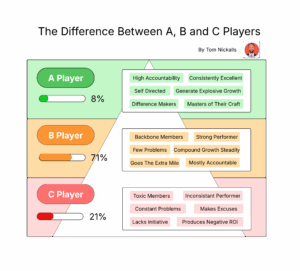
You post the job… and then one of two things happens:
- Your inbox fills with 500+ wrong applicants.
- Or it’s awkwardly quiet.
The first one was the reality for the Obsidi (formerly BPTN).
They were growing fast and posting roles regularly.
Applications poured in by the hundreds, but the right people weren’t showing up.
On paper, their postings looked like everyone else’s:
- Long company intro.
- “Competitive salary.”
- A wall of requirements.
- Vague cultural language.
- No clear hiring process.
When Castle HR helped them rewrite those postings, nothing about the talent market changed.
What changed was the signal they sent in the first 10 seconds, and suddenly, the entire hiring experience shifted: fewer total applicants, more aligned candidates, and a long-open role finally filled.
You can read the complete Obsidi case study here.
Here’s the uncomfortable truth:
When most companies struggle to find top talent, it isn’t a “talent shortage.”
It’s a job posting problem.
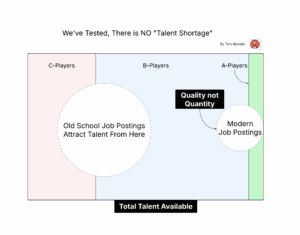
And underneath that is a straightforward model: Magnet vs Friction.
Every element in your posting is either:
- A magnet – something that pulls A-players in.
- Or friction – a reason for them to bail and keep scrolling.
Let’s make that helpful model.
How A-Players Read Your Job Posting in 10 Seconds
Top candidates do not sit down with a cup of tea and thoughtfully read 1,200 words of job copy.
They skim for a small set of signals:
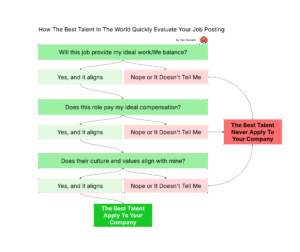
- Location and flexibility
Randstad’s latest Workmonitor found work–life balance has now overtaken pay as the top priority for employees globally (83% vs 82%).
At the same time, only about 8% of paid LinkedIn postings in the US are remote, yet they attract roughly 35% of applications.
Flexibility is not a perk anymore; it is a filter.
- Compensation and benefits
Pay transparency is no longer optional.
“Fair and clear pay” is still table stakes.
Recent employer data shows that including salary ranges in postings can attract around 40–45% more candidates and build more trust in the brand.
- Mission, values, and culture
Glassdoor’s culture survey: 77% of adults would consider a company’s culture before applying, and well over half say culture is more important than salary for job satisfaction.
People want to know: “Do these values align with mine, and will I belong there?”
The 8 Silent Dealbreakers in Your Job Post (and How to Fix Them)
Let’s get practical.
When Castle HR audits job postings for companies, the same eight issues keep popping up.
On their own, each one feels small.
Together, they explain why top talent never makes it to your pipeline.
Think of each one as a “friction point” you’re going to turn into a “magnet”.
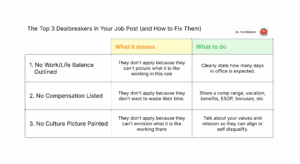
1. You Hide the Salary
Picture a high-performing engineering lead scrolling job boards on a Sunday night.
They click your role, skim the page, and see: “competitive salary” and nothing else.
They don’t assume “fair.”
They assume “unknown” and move on.
LinkedIn’s Workforce Confidence Index found that over 90% of job seekers are more likely to apply when a salary range is listed, and a Robert Half survey reported that nearly eight in ten candidates have skipped roles altogether when pay wasn’t disclosed.
So when you hide the range, you’re not being discreet. You’re quietly telling good people to keep their energy for someone else.
A better way:
- Publish a realistic range, even if it feels uncomfortable.
- Add one line on bonus, commission, equity, or profit share.
- If you’re below “big brand” market rates, say so, then lean into what you do offer (scope, flexibility, ownership).
You’ll lose some misaligned applicants and gain trust with the ones you actually want.
2. You Open With a Monologue About the Company
Most postings read like this:
“Founded in 2013, we are a leading, award-winning…”
…and three paragraphs later, the candidate still has no idea what their life would look like in the role.
That’s friction.
A-players are skimming for impact and fit. They want to know:
- “What problem am I being hired to solve?”
- “What kind of team am I joining?”
- “What does a great year in this seat look like?”
If they don’t see that quickly, they’ll assume the company hasn’t thought it through either.
A better way:
- Keep the origin story to 3-4 lines.
- Use your opening to say: “Here’s why this role matters right now, and here’s what a great 12 months looks like.”
You can impress them with your awards later. First, make it obvious why this job is worth a serious look.
3. Your Requirements List Is a Wall, Not a Filter
Here’s a quiet killer: the 23-bullet requirements section.
Harvard Business Review popularised the idea that women often only apply when they meet 100% of the listed criteria, while men will throw their hat in at around 60%.
More recent research from the Behavioural Insights Team suggests the gap isn’t quite that dramatic, but the pattern is real: long, rigid requirement lists cause good people to talk themselves out of roles.
Especially the ones who care about doing things at a high level.
A better way:
- Split your list in two:
- Must-have capabilities (5–7 bullets).
- Nice-to-have experience (3–5 bullets).
- Write must-haves as outcomes, not tool trivia:
- “Can lead cross-functional projects from idea to launch” beats “7+ years in SaaS, 5+ tools, specific degree.”
If you wouldn’t actually reject a dream candidate over a missing bullet, don’t let that bullet be the thing that stops them from applying.
4. You’re Fuzzy on Location and Flexibility
“Hybrid, details in interview” is not a strategy.
It’s a red flag.
Global workforce research from ADP and McKinsey both point in the same direction: flexibility in hours and where you work is now one of the most important factors people consider in a job.
If your posting is vague, candidates assume the worst:
“full-time in-office, blurry expectations, and probably not worth the hassle.”
A better way:
- Say plainly: remote, hybrid, or in-office – and where.
- If hybrid, spell out the rhythm (“2 days in office in Kitchener, 3 remote; core hours 10–3 Eastern”).
- Add one line on why you’ve designed it that way (mentoring, client-facing work, collaboration).
Clarity here isn’t just a kindness. It’s a filter that saves everyone time.
5. Your Culture and Values Live in Buzzwords
“We have a great culture.”
“We’re like a family.”
“We move fast and wear many hats.”
Job seekers are increasingly calling these phrases out as red flags.
Recent surveys highlight terms like “rockstar,” “feels like a family,” and “fast-paced environment” as factors that make candidates close a tab.
In Obsidi’s original postings, the values that actually made them special, building community for Black professionals in tech, creating real advancement paths, working with senior executives, barely appeared.
When those specifics moved into the posting, something shifted: the people who cared about the same things started leaning in.
A better way:
- Pick 3–5 values that actually drive decisions in your company.
- Under each, write one line of what that looks like in this role.
- “We value candour, you’ll push back on clients if we’re drifting from what we promised members.”
- Retire “great culture” and let the examples do the work.
Now your posting reads like a real place, not a brochure.
6. You Don’t Show What “Winning” Looks Like
Responsibility lists are necessary.
But if that’s all you give, you’re asking candidates to guess what success looks like.
High performers don’t want to guess.
They want to hit a target.
A better way:
Add a short section called “What success looks like in your first 12 months” with 3–5 bullets:
- “Within 3 months, you’ve audited our hiring funnel and flagged three bottlenecks.”
- “Within 6 months, time-to-fill for key roles has dropped by 20%.”
- “Within 12 months, hiring managers are using a playbook you helped build.”
Then add one or two bullets for “what tends to happen after that”: building a team, expanding scope, leading a new initiative.
Now the A-players reading your posting can see themselves winning in the role, not just performing tasks.
7. Your Hiring Process Is Opaque
From the candidate’s side, nothing feels worse than wandering into a black box:
- No idea how many interviews there will be.
- No sense of who decides.
- No indication of timing.
Studies on candidate experience suggest that 60% of candidates drop out of the application process because it feels too long or complex, and companies can lose an average of 65% of applicants along the way.
If the posting doesn’t say what’s going to happen, people assume “slow and painful.”
A better way:
Add a box titled “What to expect in our hiring process” and spell it out:
- Short intro call with Talent or the hiring manager.
- One deeper interview focused on experience and examples.
- A practical exercise or work sample (with a clear time cap).
- Final conversation with a senior leader or peer.
- Reference checks and decision.
From one of Castle HR’s job postings:
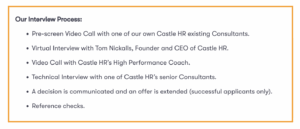
Include a simple promise: “We aim to complete this within three weeks of your first conversation.”
That one paragraph tells candidates you are organized, respectful of their time, and serious about hiring.
8. You Make Applying a Chore
You’ve seen these postings:
- “Upload your résumé… and now fill in the same details in 15 separate fields.”
- “Cover letter required. No guidance.”
- “Create an account before you can even see the questions.”
Aptitude Research’s 2023 data showed some employers see drop-off rates as high as 90%.
If your favourite A-player is already working full-time and reading your posting at 9:30 p.m., they are not going to fight your ATS to prove they’re serious.
A better way:
- Make the initial application step take no more than five minutes.
- Ask for a résumé or LinkedIn profile.
You can always add depth later with a structured interview or short assignment.
The goal of the posting is to get the right people to raise their hand, not to grind them down on page one.
The Modern Job Posting Playbook: Rewrite Yours in 60 Minutes
Here’s how to turn this from theory into a one-hour working session with your hiring manager.
Step 1: Clarify the Role’s Real Outcomes
In 10 minutes, write 3–5 sentences that start with:
“In the next 12 months, this role will be successful if…”
Focus on results, not tasks. This becomes the spine of your posting.
Step 2: Fill the Magnet Checklist
Run through these items and make sure each one is clearly visible in the draft:
- Salary range + key benefits.
- Location and work model (and why).
- 3–5 values and what they look like in this role.
- “What success looks like in 12 months.”
- Who they will work with (manager + key collaborators).
- A short “What to expect in our hiring process” section.
- Simple, quick way to apply (CV/LinkedIn + a few questions).
Step 3: Strip Out Friction
Print or pull up your posting and circle anything that is there “because we’ve always included it.”
- Overlong requirement lists.
- Generic culture clichés.
- Extra steps in the application.
Start cutting from that list.
Step 4: Sanity Check With Your A-Players
Send the revised posting to one or two current top performers and ask them two questions:
- “If you saw this when you were job hunting, would you have applied?”
- “What would have made you hesitate or scroll on?”
Treat their answers as gold – and adjust.
Step 5: Launch and Track Quality, Not Just Volume
For this role, track three things before and after the rewrite:
- Number of applicants.
- The percentage you’d actually interview.
- Time-to-fill.
When Obsidi ran this play, they saw fewer applicants, but a noticeably higher percentage of people they were excited to interview.
They found such great talent that they ended up hiring two people!
If you want to see that story in more detail, including how we reworked the posting, take a look at Castle HR’s blog “How to Rework Your Hiring Process to Attract All-Star Candidates.”
Your Move This Week
Treat your job posting as a strategy document, not a form.
Pick one critical role, the one where you most need an A-player, and block 60 minutes with your hiring manager to run this playbook.
Use the Magnet vs Friction lens.
Make pay, location, culture, outcomes, process, and apply flow explicit.
Cut everything that is there out of habit rather than purpose.
If you do just that for a single posting, three things are likely to happen:
- You will get fewer applicants.
- You will get top talent applying.
- You will be very glad you did.
Because the people who now see themselves in your role won’t just be looking for a job.
They’ll be the ones ready to help you build the next chapter of your company.

Tom Nickalls is the founder and CEO of Castle HR. Castle was launched in 2019 with the mission of helping businesses build high-performance teams by prioritizing culture, onboarding, and employee development. Since then, Castle has grown exponentially and empowered 100+ companies in Canada to scale smarter with modern, fractional HR service and strategy. Passionate about fostering strong workplace dynamics, Tom is dedicated to aligning business success with employee satisfaction in the ever-evolving world of work.